The "Ozempic pill" has 70× the dose of the jab. So why doesn't it work better?
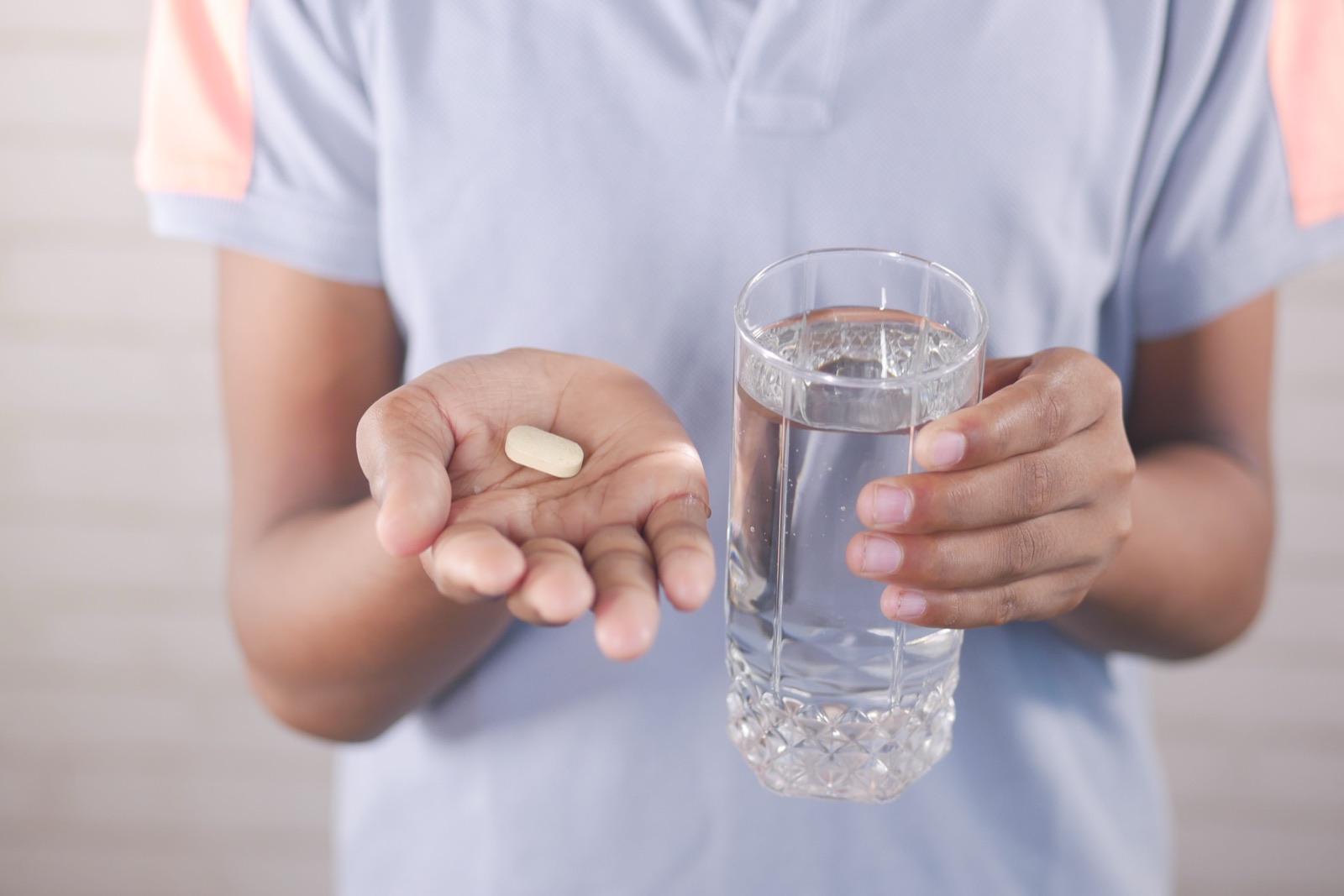
Weight-loss tablets are here, and the headlines say "same drug, no needle". The science is stranger than that. The Wegovy tablet contains about 70 times more semaglutide a week than the injection, yet its trial results are no better. Here is why, and what it means for your muscle.
This article is general information about published research. It is not medical advice, and not a recommendation to start, stop or change any medicine.
70×
more semaglutide swallowed each week than injected
~1%
of a swallowed dose is absorbed
~40%
of weight lost was lean mass, not all of it muscle, in one injection trial
What has actually changed
On 11 June 2026 the Medicines and Healthcare products Regulatory Agency (MHRA) approved oral semaglutide, sold as Wegovy tablets, for weight management. Semaglutide is a GLP-1 medicine: it copies a natural gut hormone, GLP-1, that helps control appetite. It is the same active ingredient as the Wegovy injection, and as Ozempic, the brand licensed for type 2 diabetes. That is why the press settled on the "Ozempic pill" as a nickname. The product is the Wegovy tablet; there is no Ozempic pill. On 10 August the MHRA authorised a second tablet, orforglipron, sold as Foundayo, for weight management and for type 2 diabetes.
Both are prescription-only medicines. Both are licensed for adults who meet specific criteria, alongside a reduced-calorie diet and more physical activity. NHS availability depends on an evaluation by the National Institute for Health and Care Excellence (NICE) of each medicine. Whether either is suitable for you is a conversation for your doctor or pharmacist, not for a fitness studio. This article is about the science, and about training.
Why the tablet needs 70 times the dose
Semaglutide is a peptide, a small protein. Swallow a protein and your digestive system treats it as food. Stomach acid and enzymes take it apart long before it reaches the blood, which is why these medicines were injections for well over a decade.
The tablet gets around that with an absorption enhancer called SNAC. It briefly changes the chemistry of the patch of stomach lining around the dissolving tablet, protecting the semaglutide for long enough that a small fraction crosses into the bloodstream intact. The same tablet technology has been used for type 2 diabetes since 2019; what is new is the weight-management licence and the 25 mg dose.
Small is the operative word. About 1% of a swallowed dose, often less, is absorbed, and the amount varies a lot from day to day. The rest is digested like any other protein. To get a useful amount into the blood, the tablet contains 25 mg and is taken every day: 175 mg a week, against 2.4 mg a week by injection. That is about 70 times more drug swallowed (73, to be exact) to deliver a broadly comparable amount.
It also explains the ritual. The tablet has to be taken on an empty stomach, after at least eight hours without food, and swallowed whole with a sip of water, no more than half a glass. Then comes a wait of at least 30 minutes before eating, drinking or taking other oral medicines. Eating or drinking sooner lowers absorption further. The rules exist because the absorption is small and variable, and the routine makes it less variable.
So a dose that sounds enormous is really a measure of how little gets through. The number on the box is not the number in your blood.
The second tablet works differently
Orforglipron is not a peptide at all. It is a small molecule, designed from the start to survive digestion and be absorbed like an ordinary tablet. There is no fasting rule and no half-glass of water: it is taken once a day, at any time, with or without food. It acts on the same GLP-1 receptor, but it is a different molecule from semaglutide, so "Ozempic pill" does not describe it at all.
What the trials show
Each medicine has a main weight-management trial. The headline results are close.
Semaglutide 2.4 mg · weekly injection
STEP 1 (2021) · 1,961 adults · 68 weeks
14.9%
average loss · 2.4% on placebo
Semaglutide 25 mg · daily tablet
OASIS 4 (2025) · 307 adults · 64 weeks
13.6%
average loss · 2.2% on placebo
Orforglipron · daily tablet, highest trial dose
ATTAIN-1 (2025) · 3,127 adults · 72 weeks
11.2%
average loss · 2.1% on placebo
Three things to hold on to. These are three separate trials, in different groups of people, over different lengths of time, so this is not a head-to-head comparison and small differences mean little. The figures are averages across everyone who started, including people who stopped: some lost far more, some far less. And the common side effects, nausea, constipation and diarrhoea, are similar in kind across all three.
The pattern is still clear. Seventy times more drug in the tablet did not mean more weight lost. What reaches the blood is what counts, and for the semaglutide tablet that is a broadly comparable amount to what the injection delivers.
What about muscle?
Not all the weight you lose is fat. In a body-composition substudy of the STEP 1 injection trial, 140 participants were scanned before and after 68 weeks of treatment. On semaglutide they lost 8.4 kg of fat and 5.3 kg of lean mass on average, so roughly 40% of the weight that went was lean mass.
Lean mass, as the scan measures it, is everything that is not fat or bone: muscle, but also water, organs and connective tissue. So that figure is not 40% muscle. Some lean-mass loss comes with any substantial weight loss, dieting without medication included. But it matters. Muscle is what carries you up the stairs, supports your joints and your metabolism, and keeps everyday life easy.
Is the pill any different? There is no evidence that the tablet is better or worse for muscle than the injection, because no trial has compared them. The one tablet trial that scanned a subgroup of its participants cannot be set against the injection figures: the people, the weight lost and the methods all differ. Until a head-to-head trial exists, the muscle question is the same whichever form the medicine takes.
Keep muscle in the plan
In 2025 four US medical and nutrition societies published a joint advisory on nutrition during GLP-1 treatment: the American College of Lifestyle Medicine, the American Society for Nutrition, the Obesity Medicine Association and The Obesity Society. Its priorities apply to the pill and the jab alike:
- A structured exercise programme: regular strength training, at least three times a week, plus at least 150 minutes of moderate aerobic activity.
- Enough protein, with higher targets while you are actively losing weight.
- Enough fluid and fibre.
- Attention to vitamins and minerals when meals get small.
- A registered dietitian for anyone struggling to eat enough.
It is blunt on one point: more protein on its own, without strength training, is unlikely to preserve muscle.
The exercise evidence points the same way, with one honest caveat. In a Danish trial, people took an earlier GLP-1 medicine, exercised under supervision for a year, or did both. Those who did both lost about twice as much body fat as either group alone, and a later analysis found that they held on to their strength as the weight came off. Whether strength training specifically protects muscle on today's medicines is still being tested in trials that have not yet reported. It is the sensible, widely recommended approach; it is not yet a proven one, and we will not pretend otherwise.
One more reason to build strength habits that do not depend on the medicine. In the extension of the STEP 1 trial, people who stopped the injection regained about two-thirds of the weight they had lost within a year, with treatment and lifestyle support both withdrawn.
In practice, four things help:
- Keep strength work regular and manageable. Short sessions you can repeat beat one heroic one, and on a smaller appetite your recovery budget is smaller too.
- Eat enough protein, even when you are not hungry. Appetite often falls during treatment, and that can make it hard to eat enough of the one nutrient muscle depends on. A dietitian can help with targets.
- Drink enough. Nausea and a small appetite often mean less fluid, and training dehydrated feels far harder than it should.
- Talk before you train. Tell your trainer about changes in energy, appetite or side effects, and raise anything medical with your prescriber or pharmacist.
Where EMS fits
E-Pulsive combines guided movement with electrical muscle stimulation (EMS) in a focused 20-minute session, one-to-one with a trainer. Whole-body EMS has trial evidence of its own: a 2021 review that pooled 16 studies of non-athletic, mostly untrained adults found large gains in muscle mass and in leg and trunk strength, measured mostly against people who did not train or did only light activity, and no statistically significant effect on body fat. That evidence comes from people who were not taking weight-management medicines, so it says what EMS can do for muscle in general, not what it does alongside these medicines.
We also want to be precise about what we do not know. A specific protective effect of EMS against muscle loss during GLP-1 treatment has not been established, and we could not find a published trial that tests it. What we can say is that regular, supervised strength work is what the evidence recommends. EMS is one way to do that work, and a short session is one that some people find easier to keep up in a week that already feels like a lot. We do not offer it as a way to protect muscle on these medicines, because that has not been tested.
If you use weight-management medication, tell your trainer. Our health screening asks about your health and any conditions before your first session, so tell us about any medicines too. Your trainer then plans the session around how you feel on the day: regular muscle work at your current ability, easing off when energy is low and building back up as it returns.
What does progress mean to you?
Feeling stronger on the stairs? Returning to a favourite activity? Carrying the shopping without thinking about it? Tell us what matters in your everyday life, and we can talk about your training goals. The medicine may change your appetite. Strength still needs a plan.
Or message us on WhatsApp.
This article is general information, not medical advice, and not a recommendation to start, stop or change any medicine. Prescription-only medicines are decided between you and your doctor, prescriber or pharmacist. If you have a medical condition or take any medication, please speak to your doctor before booking.
Sources
- MHRA, 11 June 2026 — First GLP-1 tablet for weight loss approved in the UK
- MHRA, 10 August 2026 — UK first in Europe to authorise orforglipron for weight management and type 2 diabetes
- Wegovy 25 mg tablets — Summary of Product Characteristics (emc)
- Foundayo film-coated tablets — Summary of Product Characteristics (emc)
- Clinical pharmacokinetics of oral semaglutide — Clinical Pharmacokinetics, 2021
- Wilding et al. — Once-weekly semaglutide in adults with overweight or obesity (STEP 1), NEJM 2021
- Wharton et al. — Oral semaglutide 25 mg in adults with overweight or obesity (OASIS 4), NEJM 2025
- Orforglipron, an oral small-molecule GLP-1 receptor agonist, in obesity (ATTAIN-1), NEJM 2025
- Wilding et al. — Impact of semaglutide on body composition in adults with overweight or obesity: exploratory analysis of the STEP 1 study (conference abstract), Journal of the Endocrine Society 2021
- Nutritional priorities to support GLP-1 therapy for obesity: a joint advisory of four societies, Obesity 2025
- Lundgren et al. — Healthy weight loss maintenance with exercise, liraglutide, or both (S-LiTE), NEJM 2021
- Wilding et al. — Weight regain after withdrawal of semaglutide: the STEP 1 trial extension, Diabetes, Obesity and Metabolism 2022
- Kemmler et al. — Efficacy of whole-body electromyostimulation (WB-EMS) on body composition and muscle strength in non-athletic adults: a systematic review and meta-analysis, Frontiers in Physiology 2021
- Kemmler et al. — Position statement and updated international guideline for safe and effective whole-body electromyostimulation training, Frontiers in Physiology 2023